Science & Therapy
This section takes the questions I have as someone who cares for a person with BPD and tries to find answers in science, medicine and therapeutic approaches. I’m not an expert — just curious and searching for evidence that connects with real life.
-
The Hidden Cost of Caregiver Loneliness
Read more: The Hidden Cost of Caregiver LonelinessWhen you’re supporting someone with BPD, the loneliness can be hard to name — let alone solve. And the usual advice on how to stop feeling lonely often falls flat. But there are two evidence-backed approaches that can reduce what loneliness is doing to your body, and make you feel better.
-
Why You Feel Dreadful (When It’s Not You Who’s Ill)
Read more: Why You Feel Dreadful (When It’s Not You Who’s Ill)Your loved one is the one with BPD — so why do you feel so dreadful? The answer might be in your body, not your mind.
-
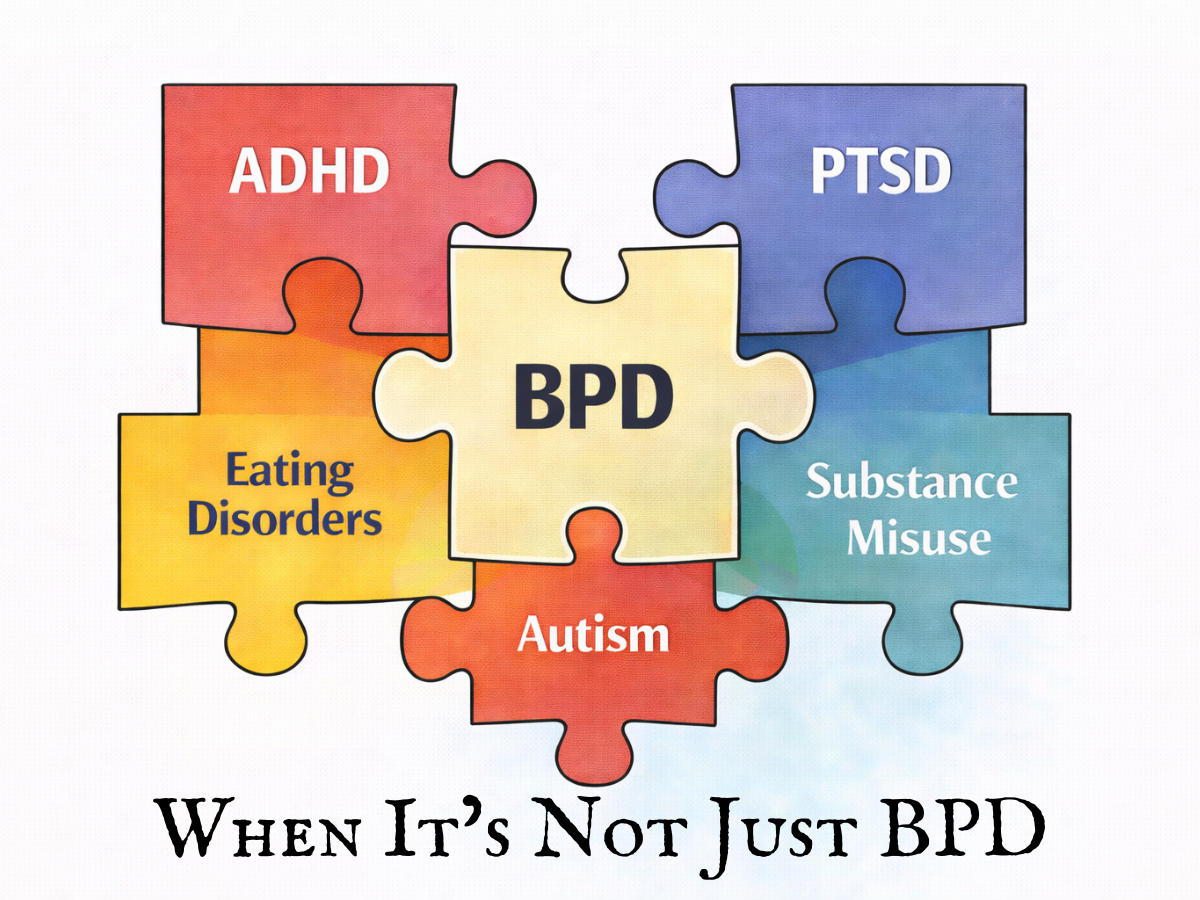
When It’s Not Just BPD: What We Know About Overlapping Conditions
Read more: When It’s Not Just BPD: What We Know About Overlapping ConditionsHaving BPD and nothing else is the exception, not the rule. So why is most support still built around single diagnoses?
-
A Dive Into The APMS
Read more: A Dive Into The APMSA new NHS survey suggests almost 1 in 10 young women screen positive for BPD — and nearly half of those screening positive report getting no treatment at all. So what is this really measuring: a disorder, or the pressure young women are living under?
-
Borderline Personality Disorder – What’s In A Name?
Read more: Borderline Personality Disorder – What’s In A Name?A look at how one of the most misunderstood mental health diagnoses ended up with multiple names and why the language we use still matters.
