Tag: life

  • The Hidden Cost of Caregiver Loneliness

    The Hidden Cost of Caregiver Loneliness

    Loneliness is not the same as being alone. We can be alone for hours and feel content; we can be surrounded by family and feel desperately lonely. Loneliness is a feeling — a felt gap between the connection we have and the connection we want.

    It is also, increasingly, a public health concern. The World Health Organization has named loneliness a global health priority. National surveys across the UK, the US, and Europe consistently find that significant proportions of the population describe themselves as lonely some or much of the time. And yet, despite how widespread it is, few of us are willing to admit to it publicly. Loneliness carries a particular kind of shame. There is an unspoken cultural assumption that if you are lonely, something is wrong with you — that popular people, well-adjusted people, people who have done the work of building a life, are not lonely. This assumption makes feeling lonely even harder. It implies, quite wrongly, that if you are lonely you are also a loser.

    Caregivers of someone with a severe mental illness are particularly vulnerable to loneliness, and that vulnerability takes more than one shape. For some, the relationship with their loved one has consumed so much that other connections have thinned or disappeared — friends drifted away, family kept their distance, the energy for new relationships simply isn’t there. These caregivers may have very few people in their lives at all. For others, the loneliness is different: they are surrounded by people, but those around them cannot or will not take on board what their life is actually like.

    This article looks at why caregivers are so vulnerable to loneliness, what it does to a body, and what — given how distinctively difficult their situation is — can be done about it.

    What Loneliness Does To The Body

    A great deal, as it turns out. The research that has done the most to make this visible is the work of Julianne Holt-Lunstad and her colleagues, who pooled data from hundreds of studies into a meta-analysis. This study found that lonely and socially isolated people show measurably higher rates of early death, with mortality risk increased by roughly a quarter to a third depending on how the comparison is drawn. The popular shorthand — that loneliness is roughly equivalent to smoking fifteen cigarettes a day — comes from this body of work, and while it is rough rather than precise, the underlying claim is broadly true. Loneliness, sustained over time, shortens lives at a scale comparable to major medical risk factors such as smoking.

    A separate meta-analysis published in the journal Heart found similar results for heart health specifically. Poor social relationships are associated with around a 29% increased risk of coronary heart disease and a 32% increased risk of stroke.

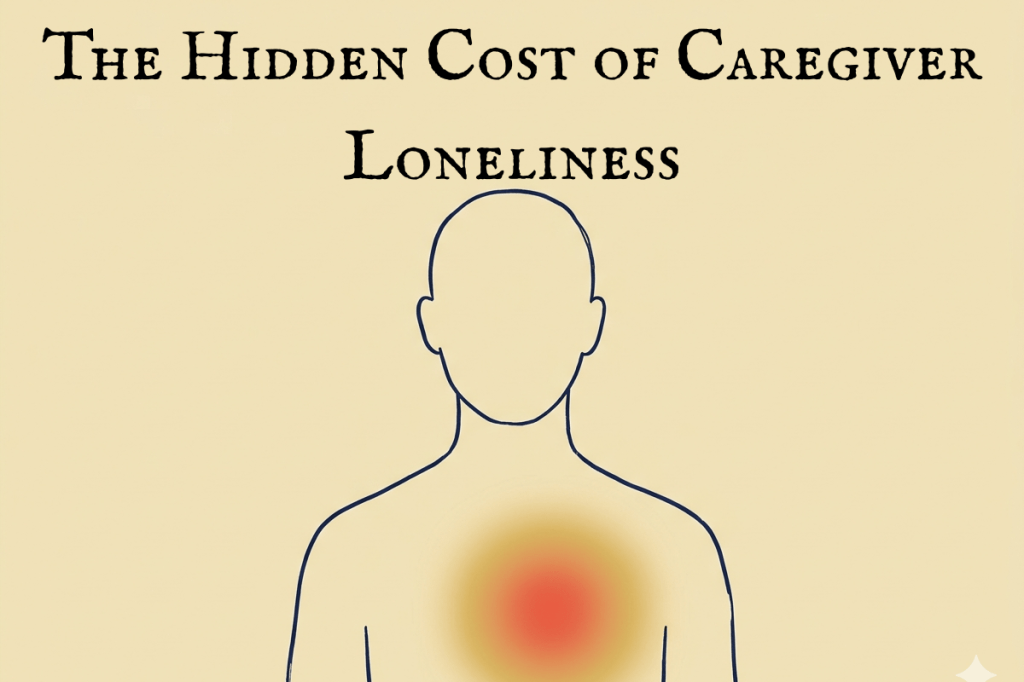
    So why does loneliness have such a profound and harmful effect on the body? The human nervous system evolved expecting connection — we only survived as a species because we lived in groups. It therefore registers the absence of connection as a major threat or stressor.

    The problem is that we have nervous systems that are designed to be stressed for a short time — running away from an animal that wants to eat us — and then quickly return to a non-stressed state. The stress response drives inflammation which in the short term is good: it would help us heal from a wound received when running away from that pesky animal. But being stressed for long periods creates low-grade, persistent inflammation. And it is this chronic inflammation — not loneliness directly — that increases susceptibility to a wide range of diseases. Cardiovascular disease, type 2 diabetes, autoimmune conditions, dementia, depression: these have all been linked to inflammation. Loneliness is not, in any simple sense, causing these conditions. It causes changes in the body that make these conditions more likely.

    What This Looks Like In Caregivers

    We don’t yet have research specifically on loneliness in BPD caregivers. However, a 2014 study found that caregiving in this group caused high levels of grief and burden — even higher than in those caring for loved ones with other mental illnesses, such as schizophrenia.

    And a 2023 review identified stigma as a distinctive cause of caregiver isolation. The cultural shame around having a loved one with mental illness, especially one as poorly understood and as poorly portrayed as BPD, pushes caregivers away from the very people who might otherwise be there for them. They keep the diagnosis private, edit what they tell friends, sidestep the questions they cannot answer truthfully.

    Why The Standard Advice Doesn’t Quite Fit

    The standard loneliness advice, when it appears in articles and self-help books, almost always points outward. Connect more. Disclose more. Get out more. Build your support network. For many people in many situations, this is reasonable advice. If you are caring for someone with BPD, it can be more complicated.

    Disclosure to other people — friends, extended family, colleagues — does not always produce the positive effect the advice assumes it will. Instead it may produce well-meaning but unhelpful responses: you really need to put yourself first, or have you thought about leaving? Or a hasty change of subject because the situation is too uncomfortable to sit with. And your loved one with BPD is not always the person you can turn to for this. Their dysregulation can crowd out the bandwidth for anyone else’s experience — and in some relationships, such as parent and child, it would not be right to turn to them anyway.

    The danger is that you try the standard advice, find it does not reliably help, and conclude that the loneliness is your own failure — that you must be doing something wrong, or that you are somehow defective at human connection. You are not. The standard advice works less well for you not because you are failing at it, but because it assumes that the people you disclose to will be able to validate what you’re going through. And this isn’t what often happens in real life. Many of us just aren’t very good at the skill of validation. There are a lot of reasons for this — enough to write another article. Suffice to say here that the odds are you are just as likely — perhaps even more so — to be offered advice, solutions, or to be dismissed, if you open up about your experience of being a caregiver to someone with BPD.

    Tackling It From A Different Angle

    The thing about a problem you cannot easily solve head on is that you can sometimes tackle it sideways instead. Two side approaches are worth knowing about, both supported by good research. And you don’t need to pick and choose, they can work alongside each other.

    The first is purpose. A study published in 2015 tested whether any psychological factor produced the opposite pattern to loneliness in the body. They found that a sense of purpose and meaning in life was associated with a reversal of the inflammatory pattern. The size of the protective effect was roughly equal to the size of loneliness’s harmful effect.

    What is great about this is that purpose is something you can be in control of. It’s personal. It doesn’t come from other people — it comes from inside. It can be located in the action of caregiving itself, or in something else entirely — a piece of work, a creative project, a community role, a private commitment to a cause. The biological benefits do not depend on the source. What they require is a relationship, sustained over time, between you and something you find meaningful.

    The second side approach is the arts. This is the work of Professor Daisy Fancourt. Her recent book Art Cure (2026) gathers the evidence: regular engagement with the arts is associated with reductions in inflammatory markers, lower stress hormone levels, better cardiovascular function, and, at the population level, reduced mortality.

    The research distinguishes between two ways of engaging. Participatory engagement — singing, dancing, drawing, playing an instrument, writing, joining a choir or a community group — can produce measurable benefits. Receptive engagement — listening to music, reading, going to a museum, watching a film, looking at art — can also produce benefits, albeit not quite so strong. The distinction matters because it widens the door considerably. If you have no time for a weekly choir, you can still sit down and listen to music at home. If you cannot afford theatre tickets, you can still take a library book to bed. None of this needs to be performed for anyone. None of it requires talent. The point is the engagement, not the production.

    So the things you might already do for relief — putting on music when the house is quiet, reading a novel before sleep, sketching for half an hour on a Saturday morning — are not indulgences. They can change your biology for the good. They can potentially reduce the inflammation that loneliness drives up.

    When You Have More Than One Source Of Resilience

    When you have several different sources of resilience — purpose somewhere in your life, regular contact with the arts, perhaps physical movement, perhaps a faith, perhaps a single trusted friend — you become less dependent on any one of them in particular.

    If you have built some inner resources, you don’t need your friend to respond to you ‘perfectly’ when you have a catch-up to feel better. The process of getting it off your chest might be enough, because it is not being asked to do all the work of relieving your distress.

    This is not an argument against connection. Where genuine connection is available — be that from a friend, a therapist, a peer in a support group — it can be incredibly valuable. The point is more modest: if you have found that the standard advice on how to tackle loneliness doesn’t quite work for you, you are not without options. There are alternatives out there, and evidence that they can help.

    Conclusions

    We need to be realistic. Loneliness has structural causes that no amount of personal practice can resolve. The stigma around BPD is unlikely to disappear any time soon. The wider challenges of caregiving — its invisibility, its open-endedness — are not changed by someone writing, listening to music, or finding purpose. And in your own life, the people around you may continue to struggle to take on board what you’re living through.

    However you are not without resources, even when you are without witnesses. The body’s response to loneliness is inflammation. Inflammation can be reduced. And on the days when you do open up to someone and feel truly seen, who knows? Maybe the effects will be all the stronger, because of all the work you have done to build a body that can receive the relief it offers.

    Sources And Further Reading

    Holt-Lunstad, J., Smith, T. B. & Layton, J. B. (2010). Social Relationships and Mortality Risk: A Meta-analytic Review. PLoS Medicine, 7(7), e1000316.

    Valtorta, N. K., Kanaan, M., Gilbody, S., Ronzi, S. & Hanratty, B. (2016). Loneliness and social isolation as risk factors for coronary heart disease and stroke: systematic review and meta-analysis of longitudinal observational studies. Heart, 102(13), 1009–1016.

    Bailey, R. C. & Grenyer, B. F. S. (2014). Supporting a person with personality disorder: A study of carer burden and well-being. Journal of Personality Disorders, 28(6), 796–809.

    Guan, Z., Poon, A. W. C. & Zwi, A. (2023). Social isolation and loneliness in family caregivers of people with severe mental illness: A scoping review. American Journal of Community Psychology, 72(3–4), 443–463.

    Cole, S. W., Levine, M. E., Arevalo, J. M. G., Ma, J., Weir, D. R. & Crimmins, E. M. (2015). Loneliness, eudaimonia, and the human conserved transcriptional response to adversity. Psychoneuroendocrinology, 62, 11–17.

    Fancourt, D. (2026). Art Cure: The Science of How the Arts Transform Our Health. Cornerstone Press.
  • Bold Beautiful Borderline

    Bold Beautiful Borderline

    PODCAST DETAILS

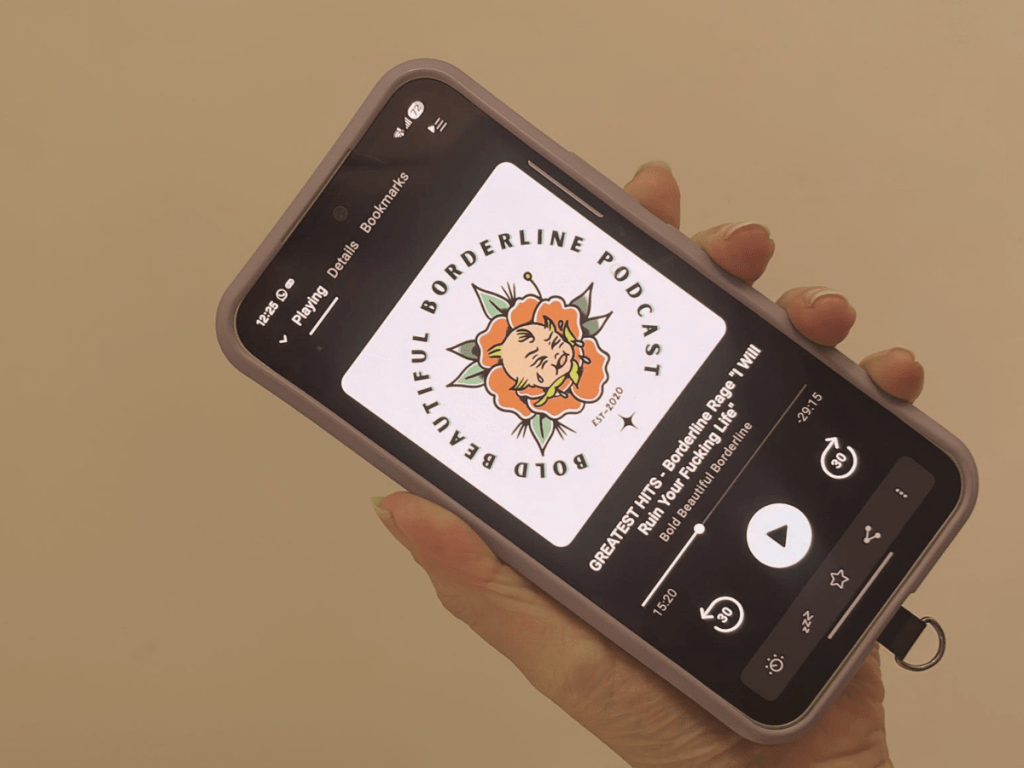
    Title: Bold Beautiful Borderline

    Host: Sara Abbott

    Platform/Availability: Spotify, Apple Podcasts, and all major podcast platforms

    Episode: Borderline Rage “I will ruin your fucking life”

    Year: re-released 7th December 2025

    Host background: Sara is a Licensed Clinical Social Worker with lived experience of BPD.

    1. WHY I CHOSE TO LISTEN TO THIS

    I decided to see if I could find some podcasts about BPD and this was one of the first to come up in the search. A therapist with lived experience is such a powerful combination and I was keen to tap into her wisdom.  

     I picked this recent re-release episode as a starting point because I find rage extremely challenging – both my own and other people’s. And my daughter experiences a lot of rage.

    2. WHAT IT COVERS

    Sara breaks down in detail a recent argument she had with her husband: what she was feeling and why, and how it was resolved. She then goes back and gives examples from her past of when she experienced rage and dealt with it less well. She reads out responses she had from people with BPD as to what rage feels like to them. She goes into some of the theory behind BPD rage, DBT skills and guidance for people who might be on the receiving end of it.

    3. STRENGTHS

    Sara is highly articulate and speaks passionately and with great clarity about her own experience and as a therapist. I loved the ‘case studies’ from her own life.

    4. LIMITATIONS

    FYI there is the occasional swear word – in case you’re thinking of listening to it in a public space!

    Sara does give some brief advice to people who are on the receiving end of BPD rage, but this isn’t the focus of the episode.

    5. TONE AND SENSITIVITY

    She describes her podcast as raw, honest and sometimes humorous and that’s what I got from this episode. She has great empathy for her listeners who have BPD – their strengths and their struggles.

    6. PERSONAL REFLECTION

    I think I’m going to re-listen to this episode as there was so much for me to digest. Listening to her journey – things she did when she experienced rage when she was younger, to how she handled it in this recent argument with her husband left me with hope. My daughter is working so hard in therapy, but it’s a long, slow haul and sometimes it’s hard to see the progress, so it’s heartening to hear from someone who has stuck with it and is now in such a different place.

    7. WHO IT IS FOR

    I think it’s primarily for people with lived experience of BPD, but as someone supporting a loved one with it I also found it really useful.

    8. STANDOUT QUOTE

    It’s OK to feel anger for longer periods of time, it’s OK for all of those things to live there, it’s just simply what we do with it.

    9. FINAL THOUGHTS

    This podcast is now on my subscribed list!

    LINKS

  • Handstands

    Handstands

    Trigger Point

    It was 8pm. We were on the sofa, watching television as usual. The dog crouched on the floor, quivering with excitement, waiting for you to throw his ball.

    Fleabag had just said I love you — and goodbye to the hot priest. A lovely end to a brilliant series. I said “all done” to the dog and walked out into the hall to put his ball away.

    When I came back, you were off the sofa and furious.

    The dog had ruined everything, you said. No — I had ruined everything. You’d wanted to do handstands. I’d ignored what you wanted, got the dog’s ball out instead, and now the moment had passed. You’d lost your motivation and it was all my fault, because I always put the dog first.

    You were getting louder and louder. I asked you to stop shouting. You said I only listened when you shouted. You’d asked me nicely to put the dog in his crate so you could do handstands, and I’d ignored you. Why should you make all that effort — keep trying with your DBT skills — if they didn’t even get you what you wanted? If I was going to carry on being so fucking useless?

    I stood there trying to catch up. It all felt like it had come out of nowhere, but it hadn’t.

    The Set Up

    It had started twenty minutes earlier, while you were still eating.

    Or maybe even earlier than that when I decided to eat without you. I was post-migraine hungry and couldn’t wait for your appetite to kick in. So I ate on the sofa alone.

    A Routine Disrupted

    Eating separately shifted the whole rhythm of the evening. It meant I’d already done the after dinner dog routine — ball throwing, kibble hiding, peanut-butter LickiMat — the routine we’d devised to try and put a limit on his relentless demands to play with us in the evening. The routine we usually did together.

    Then I was back on the sofa again, keeping you company while you ate your dinner. Sausages and mash, broccoli and green beans, everything swimming in gravy. One of your favourites.

    The Ask I Missed

    We were watching Fleabag when you said you wanted to do handstands, after you finished eating. These post-dinner handstands were a new thing. You said they gave you that strong feeling in your joints — like when you used to swing from the chin-up bar when you were little.

    You said, basically: he’s had his ball — put him in his crate so I can do handstands in peace.

    But I wasn’t so sure. The dog was staring, fully expecting the ball to appear again. And I wanted a quiet life — because when the dog got frantic, you shouted, I snapped back, and everything went to pot.

    I didn’t say any of that out loud. I just went to the kitchen and came back with the Nutella jar and a big spoon — your favourite pudding — and the dog’s ball.

    The Spiral

    You stared hard at me and silently flicked two middle fingers while you licked your Nutella spoon. I let it slide. I was focused on trying to please both of you: a quick play with the dog, then the handstands.

    Except the dog didn’t want to play with me. He kept delivering the ball to you.

    So I leaned over and picked it out of your lap, trying to save you the trouble of throwing it. You flinched as I got close. That stung, but I ignored it, not wanting to provoke you.

    Eventually I put the ball away. And then I came back to find you furious, and I got that familiar stomach-dropping feeling as your rage ramped up.

    Part of me was cross because it felt like it was over nothing — like I was being attacked out of nowhere.

    I told you I wasn’t a mind reader, and that if I’d known the handstand thing was time-critical, I would have handled the dog differently. You looped through your anger again: I should have known what you needed.

    As you raged I flipped between trying to defend myself and mutinous silence. Eventually I pushed back — telling you it was impossible to be open and reflective about my own actions while you were shouting at me.

    Lessons From Childhood

    You said this was no different from what had been expected of you at school — the teachers had shouted you into overwhelm, and then expected you to reflect on your behaviour and apologise.

    Hearing those words, my heart broke. I knew you’d been challenging at school, but no one should be treated like that, especially a child.

    You said it wasn’t just teachers. It was me too — I always made you apologise and rarely apologised myself.

    It was an uncomfortable truth. For all the stories I could tell myself about your “bad” behaviour, things usually escalated because I lost my temper.

    And then you looped back to the same old point: I never listened.

    The Repair

    You’d said it many times before — the not listening — and it always hit a nerve, because I did listen. I just didn’t always agree. But in a moment of inspiration, I tried something different. I asked if I could repeat back what I thought you’d told me, to check whether I’d understood. You could correct me if I’d got anything wrong.

    I said something like:

    So you were eating your dinner and you decided you wanted to do handstands when you finished. You could see that might be difficult with the dog jumping around, so you suggested putting him in his crate. I ignored that and got his ball instead. He kept bringing it back to you, and then I invaded your body space by leaning over to pick it up, which wound you up even more. And by the time I put the ball away, you’d lost the urge to do the handstands. That was frustrating because you’d genuinely wanted to practise. And it felt like I’d ignored you and put the dog’s needs before yours — and that wasn’t fair.

    As I said it, I could see — and feel — you calm down. And as you calmed, I felt myself shifting too. I could see it more from your point of view. I felt empathy for your frustration. I saw that little girl — taken into foster care — who’d never felt she’d been put first.

    I waited a moment then said that part of me still thought waiting could have worked — but I could see why it hadn’t for you. I was half-expecting you to explode again. You didn’t.

    See Me

    How quickly you calmed down surprised me. It gave me pause. I’d assumed it was obvious that I understood why you were angry, but it wasn’t. I’d already been moving on to the next thing — trying to solve the problem — when what you wanted first was to feel seen.

    You told me how frustrating it was when I looked away, or made what I thought were sympathetic noises while you were trying to explain how you felt. How it made you feel ignored — like I didn’t care or understand.

    I asked if I could do the repeating-back thing again in future — so I could check I’d understood, and you could feel me listening properly. You agreed it might work. It felt important.

    You suggested I write it up as a journal post.

  • Review of the Aeri Breathing App

    Review of the Aeri Breathing App

    1. App Details
    Name: Aeri
    Type: Breathing / nervous-system regulation app
    Platform: iOS / Android
    Cost: Free and advert-free

    2. What the App Is Designed to Do
    This app provides five different breathing routines designed to support sleep and calm the nervous system.

    3. Why I Tried It
    I’m always on the lookout for tools that might help me calm down and unwind after work, and to help regulate myself after my daughter has had an episode—a time when I often get palpitations, headaches, and generally feel pretty dreadful.

    4. My Experience Using the App
    I found the app easy to understand and straightforward to use.

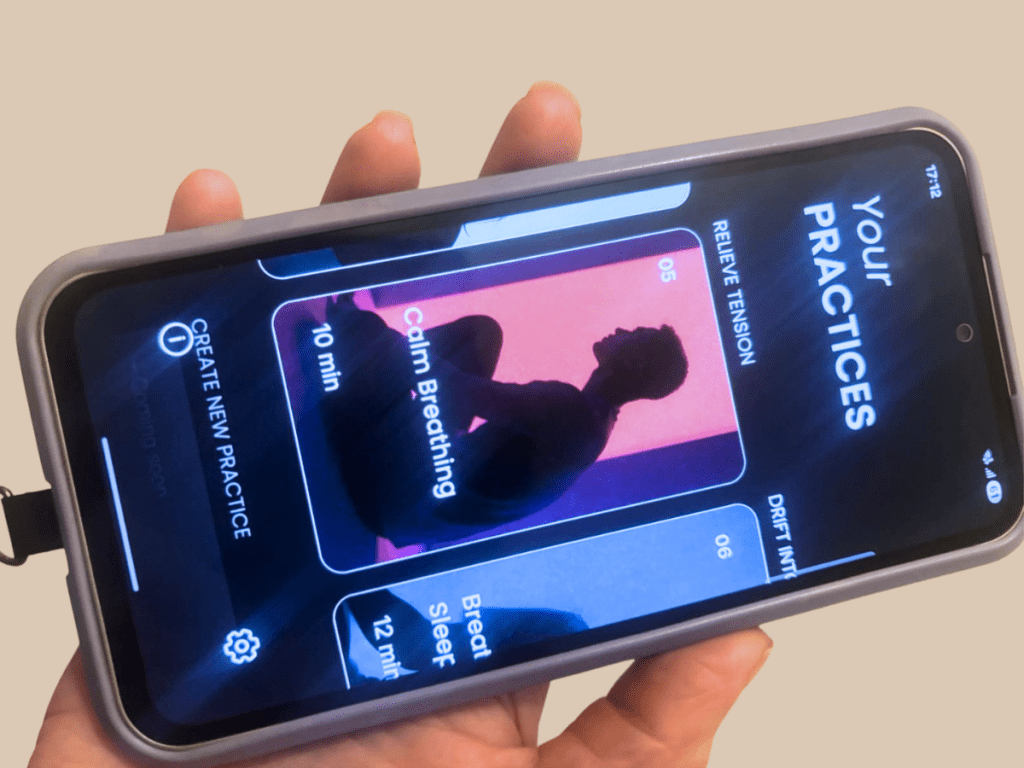
    The five breathing routines are:

    • LVL UP breathing – to increase your resilience
    • Resonance breathing – to calm your mind
    • Breathing to reset – to centre yourself
    • Calm breathing – to relieve tension
    • Breathing for sleep – to drift into sleep more easily

    Once you press start on any routine, a line appears on the screen. It travels upwards as you breathe in, goes flat when you hold your breath, and moves downwards when it’s time to breathe out.

    This visual is paired with sound cues: a rising tone as you inhale, a soft blip when you hold, and a descending tone as you exhale. You can also enable phone vibration for additional guidance.

    A timer is displayed so you can see how long is left in the routine.

    5. What I Found Helpful
    The routines last around 10–12 minutes, which is long enough for me to feel a noticeable physical shift. If they were any longer, I think I’d be put off doing them.

    My favourite routine is the Calm Breathing session. It’s incredibly simple, and every time I use it I wonder why on earth I need an app for something so basic. But the truth is that it’s much easier to keep to a steady rhythm when something is guiding you.

    6. Limitations or Things to Consider
    It’s not a magic wand that will make all your problems disappear—if only!

    If I’ve felt particularly trapped or started dissociating when my daughter is episoding, I often need to move my body first— go for a walk, or perhaps do a bit of yoga — something to discharge some of the stored up stress, before I can settle into a breathing exercise.

    7. Who I’d Recommend It For
    I’d recommend it to anyone who wants to see whether a short, structured breathing routine might help them calm down or improve their sleep.

    8. Final Thoughts
    I like this app because I find it effective, it’s easy to use, and it is completely free and advert-free (at the time of publishing). However, there are plenty of other breathing apps out there to explore, if this particular one doesn’t work for you.

    Download the app: