Tag: DBT skills

  • Waiting For The Other Shoe To Drop

    Waiting For The Other Shoe To Drop

    Spring Light

    My dearest daughter. I am writing this on the most glorious spring day. The house is full of light for the first time in months. The dog is curled up on top of his crate in a sun patch. Outside, the clematis has erupted into a wall of white flowers. The washing machine is chuntering away. You are fast asleep upstairs. All feels curiously well with the world.

    I am having a delicious week off work. And for the first time in what seems like forever, I find myself able to do things around the house.

    Clearing Out

    I’ve gone through two kitchen cupboards and taken out all the years-old spices, the packets of beans never used, the detritus that has collected over the past years. I’ve taken all my clothes that no longer serve to the charity shop and the tip. I’ve completely cleared the bed in the front garden where the new shed will go — all those pestilential dogwoods, gone at last.

    And you have gone through all your clothes too. A far bigger job than mine. The chaotic floordrobe we’ve both survived with for the past year is no more, the carpet is back and we have functioning wardrobes again.

    Something has shifted. Not dramatically. But enough that we are both, it seems, ready to do some things differently.

    What’s Changed For You

    This week you worked four days in a row — unheard of. In the past you weren’t given that many shifts. I get the impression that you are more confident now and able to do more – I wonder if that’s why you’ve been offered the extra work? Also, you previously turned down shifts you didn’t get plenty of warning on — you’ve needed to know what you’re doing well in advance, which meant you missed out on work. Last night you agreed to another shift for tomorrow! Just working two shifts at the weekend used to be enough to leave you in bed for days, recovering. No wonder you are still asleep upstairs…

    I’d say I’ve noticed a change in you since you started DBT group therapy. You have of course been doing one-to-one DBT for a couple of years, but the group therapy is new. I wonder if you’re getting more out of it because you’ve already gone through a lot of the skills in your individual sessions – you’re not having to learn everything and process the group dynamics at the same time.

    I’d love to understand more about what’s helping. But I’m also scared of somehow spoiling this good thing if I prod at it too much. It feels so young and delicate, this change, and as much as I want to know the inner workings, I get that it’s also personal and private and maybe more for observing than understanding at this stage.

    What’s Changed For Me

    You’ve pointed out that you think I’ve changed too. That I’m “better” now. I’m not sure if I am, exactly, but I am trying.

    I’ve been taking a course called Managing Suicidality and Trauma Recovery, run by NEABPD (an American charity) for parents living with on-going fear about their child’s safety.

    It’s been tough – I’ve felt a bit sorry for myself having to stay up late in the evening because of the time difference (you know how I like an early night), but I haven’t found anything equivalent in the UK. And talking to strangers about something so distressing — trauma, shame, fear, all of it — that’s my idea of hell. A lot of the time I’ve been dissociating, not really taking it in. It’s only now, as the course ends, that I feel more comfortable and able to listen. But something must have been sinking in despite this.

    I’ve also been working on building something — an app to support caregivers of people with BPD. Still very early days, but the process of thinking about what I’d actually want to support me, and trying to apply what I’ve learnt from this course and countless other sources over the years, has been surprisingly helpful. More on that another time.

    The Other Shoe

    As I write this, something has started to tug at me. The fear of jinxing it. It’s not just the changes in you that feel fragile — it’s the changes in me, and in our relationship. Is it right to talk about it all when it is so new?

    I guess I’m waiting for the other shoe to drop. We’ve had peaceful times before — the odd day, even the odd week — and then it all descended into chaos, conflict and distress again. How long have we got this time?

    And yes, I say this fully aware that this ‘easier time’ hasn’t been perfect. We’ve had our descents — times you’ve been dysregulated, times I’ve triggered you by saying or doing something or other — and things haven’t escalated the way they have in the past. Which suggests we may be travelling somewhere new – still a bumpy road, yes, but not the dirt track full of crevasses and jagged rocks we’ve been careening down thus far.

    And yet, and yet… what if it’s not? What if you wake up today and everything goes wrong, reverts back to how it was before?

    OK, I had a bit of a spiral there so I used one of my new found skills… I redirected my attention to my surroundings – the dog in his sun patch, a fly buzzing against the window. And I remembered a slide from the course that has stuck with me: Interrupt fear patterns by gently saying to yourself ‘I don’t know’.

    I don’t know how this will pan out for us, my dearest one. And I’m trying to learn to sit with that.

    One thing is for sure though: Wherever you are, whatever you are going through, I’m still here for you — not perfect, not particularly wise, but trying to do better.

    Crikey – who knew that things feeling a bit easier could be so challenging?

  • Bold Beautiful Borderline

    Bold Beautiful Borderline

    PODCAST DETAILS

    Title: Bold Beautiful Borderline

    Host: Sara Abbott

    Platform/Availability: Spotify, Apple Podcasts, and all major podcast platforms

    Episode: Borderline Rage “I will ruin your fucking life”

    Year: re-released 7th December 2025

    Host background: Sara is a Licensed Clinical Social Worker with lived experience of BPD.

    1. WHY I CHOSE TO LISTEN TO THIS

    I decided to see if I could find some podcasts about BPD and this was one of the first to come up in the search. A therapist with lived experience is such a powerful combination and I was keen to tap into her wisdom.  

     I picked this recent re-release episode as a starting point because I find rage extremely challenging – both my own and other people’s. And my daughter experiences a lot of rage.

    2. WHAT IT COVERS

    Sara breaks down in detail a recent argument she had with her husband: what she was feeling and why, and how it was resolved. She then goes back and gives examples from her past of when she experienced rage and dealt with it less well. She reads out responses she had from people with BPD as to what rage feels like to them. She goes into some of the theory behind BPD rage, DBT skills and guidance for people who might be on the receiving end of it.

    3. STRENGTHS

    Sara is highly articulate and speaks passionately and with great clarity about her own experience and as a therapist. I loved the ‘case studies’ from her own life.

    4. LIMITATIONS

    FYI there is the occasional swear word – in case you’re thinking of listening to it in a public space!

    Sara does give some brief advice to people who are on the receiving end of BPD rage, but this isn’t the focus of the episode.

    5. TONE AND SENSITIVITY

    She describes her podcast as raw, honest and sometimes humorous and that’s what I got from this episode. She has great empathy for her listeners who have BPD – their strengths and their struggles.

    6. PERSONAL REFLECTION

    I think I’m going to re-listen to this episode as there was so much for me to digest. Listening to her journey – things she did when she experienced rage when she was younger, to how she handled it in this recent argument with her husband left me with hope. My daughter is working so hard in therapy, but it’s a long, slow haul and sometimes it’s hard to see the progress, so it’s heartening to hear from someone who has stuck with it and is now in such a different place.

    7. WHO IT IS FOR

    I think it’s primarily for people with lived experience of BPD, but as someone supporting a loved one with it I also found it really useful.

    8. STANDOUT QUOTE

    It’s OK to feel anger for longer periods of time, it’s OK for all of those things to live there, it’s just simply what we do with it.

    9. FINAL THOUGHTS

    This podcast is now on my subscribed list!

    LINKS

  • Handstands

    Handstands

    Trigger Point

    It was 8pm. We were on the sofa, watching television as usual. The dog crouched on the floor, quivering with excitement, waiting for you to throw his ball.

    Fleabag had just said I love you — and goodbye to the hot priest. A lovely end to a brilliant series. I said “all done” to the dog and walked out into the hall to put his ball away.

    When I came back, you were off the sofa and furious.

    The dog had ruined everything, you said. No — I had ruined everything. You’d wanted to do handstands. I’d ignored what you wanted, got the dog’s ball out instead, and now the moment had passed. You’d lost your motivation and it was all my fault, because I always put the dog first.

    You were getting louder and louder. I asked you to stop shouting. You said I only listened when you shouted. You’d asked me nicely to put the dog in his crate so you could do handstands, and I’d ignored you. Why should you make all that effort — keep trying with your DBT skills — if they didn’t even get you what you wanted? If I was going to carry on being so fucking useless?

    I stood there trying to catch up. It all felt like it had come out of nowhere, but it hadn’t.

    The Set Up

    It had started twenty minutes earlier, while you were still eating.

    Or maybe even earlier than that when I decided to eat without you. I was post-migraine hungry and couldn’t wait for your appetite to kick in. So I ate on the sofa alone.

    A Routine Disrupted

    Eating separately shifted the whole rhythm of the evening. It meant I’d already done the after dinner dog routine — ball throwing, kibble hiding, peanut-butter LickiMat — the routine we’d devised to try and put a limit on his relentless demands to play with us in the evening. The routine we usually did together.

    Then I was back on the sofa again, keeping you company while you ate your dinner. Sausages and mash, broccoli and green beans, everything swimming in gravy. One of your favourites.

    The Ask I Missed

    We were watching Fleabag when you said you wanted to do handstands, after you finished eating. These post-dinner handstands were a new thing. You said they gave you that strong feeling in your joints — like when you used to swing from the chin-up bar when you were little.

    You said, basically: he’s had his ball — put him in his crate so I can do handstands in peace.

    But I wasn’t so sure. The dog was staring, fully expecting the ball to appear again. And I wanted a quiet life — because when the dog got frantic, you shouted, I snapped back, and everything went to pot.

    I didn’t say any of that out loud. I just went to the kitchen and came back with the Nutella jar and a big spoon — your favourite pudding — and the dog’s ball.

    The Spiral

    You stared hard at me and silently flicked two middle fingers while you licked your Nutella spoon. I let it slide. I was focused on trying to please both of you: a quick play with the dog, then the handstands.

    Except the dog didn’t want to play with me. He kept delivering the ball to you.

    So I leaned over and picked it out of your lap, trying to save you the trouble of throwing it. You flinched as I got close. That stung, but I ignored it, not wanting to provoke you.

    Eventually I put the ball away. And then I came back to find you furious, and I got that familiar stomach-dropping feeling as your rage ramped up.

    Part of me was cross because it felt like it was over nothing — like I was being attacked out of nowhere.

    I told you I wasn’t a mind reader, and that if I’d known the handstand thing was time-critical, I would have handled the dog differently. You looped through your anger again: I should have known what you needed.

    As you raged I flipped between trying to defend myself and mutinous silence. Eventually I pushed back — telling you it was impossible to be open and reflective about my own actions while you were shouting at me.

    Lessons From Childhood

    You said this was no different from what had been expected of you at school — the teachers had shouted you into overwhelm, and then expected you to reflect on your behaviour and apologise.

    Hearing those words, my heart broke. I knew you’d been challenging at school, but no one should be treated like that, especially a child.

    You said it wasn’t just teachers. It was me too — I always made you apologise and rarely apologised myself.

    It was an uncomfortable truth. For all the stories I could tell myself about your “bad” behaviour, things usually escalated because I lost my temper.

    And then you looped back to the same old point: I never listened.

    The Repair

    You’d said it many times before — the not listening — and it always hit a nerve, because I did listen. I just didn’t always agree. But in a moment of inspiration, I tried something different. I asked if I could repeat back what I thought you’d told me, to check whether I’d understood. You could correct me if I’d got anything wrong.

    I said something like:

    So you were eating your dinner and you decided you wanted to do handstands when you finished. You could see that might be difficult with the dog jumping around, so you suggested putting him in his crate. I ignored that and got his ball instead. He kept bringing it back to you, and then I invaded your body space by leaning over to pick it up, which wound you up even more. And by the time I put the ball away, you’d lost the urge to do the handstands. That was frustrating because you’d genuinely wanted to practise. And it felt like I’d ignored you and put the dog’s needs before yours — and that wasn’t fair.

    As I said it, I could see — and feel — you calm down. And as you calmed, I felt myself shifting too. I could see it more from your point of view. I felt empathy for your frustration. I saw that little girl — taken into foster care — who’d never felt she’d been put first.

    I waited a moment then said that part of me still thought waiting could have worked — but I could see why it hadn’t for you. I was half-expecting you to explode again. You didn’t.

    See Me

    How quickly you calmed down surprised me. It gave me pause. I’d assumed it was obvious that I understood why you were angry, but it wasn’t. I’d already been moving on to the next thing — trying to solve the problem — when what you wanted first was to feel seen.

    You told me how frustrating it was when I looked away, or made what I thought were sympathetic noises while you were trying to explain how you felt. How it made you feel ignored — like I didn’t care or understand.

    I asked if I could do the repeating-back thing again in future — so I could check I’d understood, and you could feel me listening properly. You agreed it might work. It felt important.

    You suggested I write it up as a journal post.

  • Review of the Aeri Breathing App

    Review of the Aeri Breathing App

    1. App Details
    Name: Aeri
    Type: Breathing / nervous-system regulation app
    Platform: iOS / Android
    Cost: Free and advert-free

    2. What the App Is Designed to Do
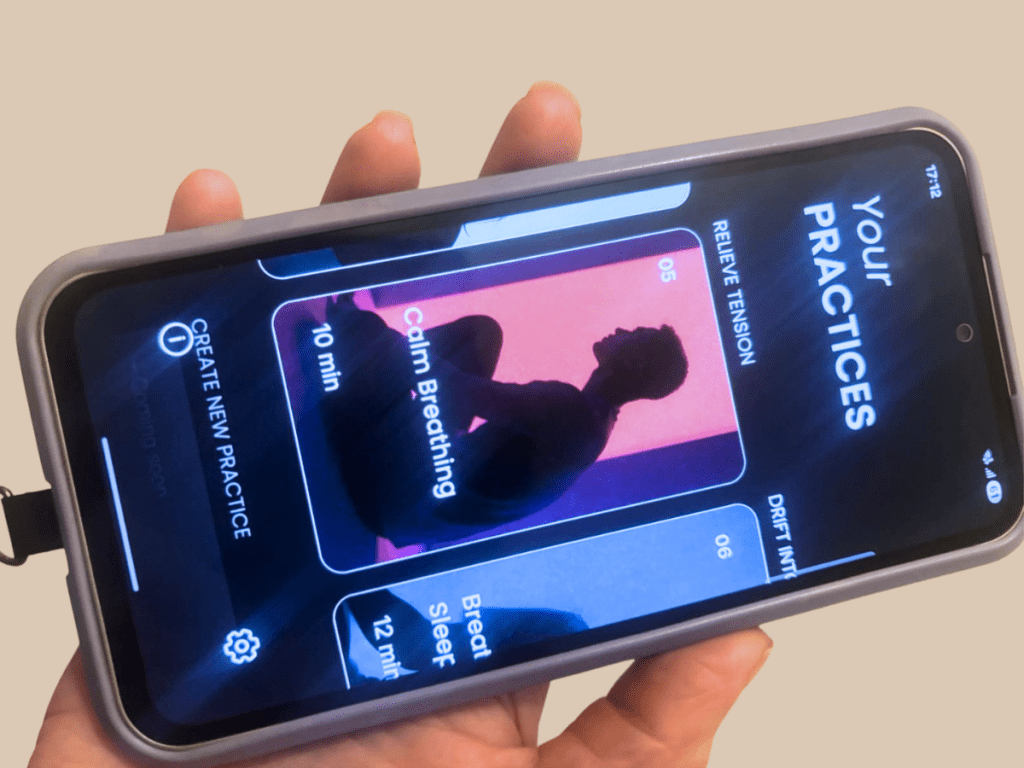
    This app provides five different breathing routines designed to support sleep and calm the nervous system.

    3. Why I Tried It
    I’m always on the lookout for tools that might help me calm down and unwind after work, and to help regulate myself after my daughter has had an episode—a time when I often get palpitations, headaches, and generally feel pretty dreadful.

    4. My Experience Using the App
    I found the app easy to understand and straightforward to use.

    The five breathing routines are:

    • LVL UP breathing – to increase your resilience
    • Resonance breathing – to calm your mind
    • Breathing to reset – to centre yourself
    • Calm breathing – to relieve tension
    • Breathing for sleep – to drift into sleep more easily

    Once you press start on any routine, a line appears on the screen. It travels upwards as you breathe in, goes flat when you hold your breath, and moves downwards when it’s time to breathe out.

    This visual is paired with sound cues: a rising tone as you inhale, a soft blip when you hold, and a descending tone as you exhale. You can also enable phone vibration for additional guidance.

    A timer is displayed so you can see how long is left in the routine.

    5. What I Found Helpful
    The routines last around 10–12 minutes, which is long enough for me to feel a noticeable physical shift. If they were any longer, I think I’d be put off doing them.

    My favourite routine is the Calm Breathing session. It’s incredibly simple, and every time I use it I wonder why on earth I need an app for something so basic. But the truth is that it’s much easier to keep to a steady rhythm when something is guiding you.

    6. Limitations or Things to Consider
    It’s not a magic wand that will make all your problems disappear—if only!

    If I’ve felt particularly trapped or started dissociating when my daughter is episoding, I often need to move my body first— go for a walk, or perhaps do a bit of yoga — something to discharge some of the stored up stress, before I can settle into a breathing exercise.

    7. Who I’d Recommend It For
    I’d recommend it to anyone who wants to see whether a short, structured breathing routine might help them calm down or improve their sleep.

    8. Final Thoughts
    I like this app because I find it effective, it’s easy to use, and it is completely free and advert-free (at the time of publishing). However, there are plenty of other breathing apps out there to explore, if this particular one doesn’t work for you.

    Download the app: