Tag: anxiety

  • Bold Beautiful Borderline

    Bold Beautiful Borderline

    PODCAST DETAILS

    Title: Bold Beautiful Borderline

    Host: Sara Abbott

    Platform/Availability: Spotify, Apple Podcasts, and all major podcast platforms

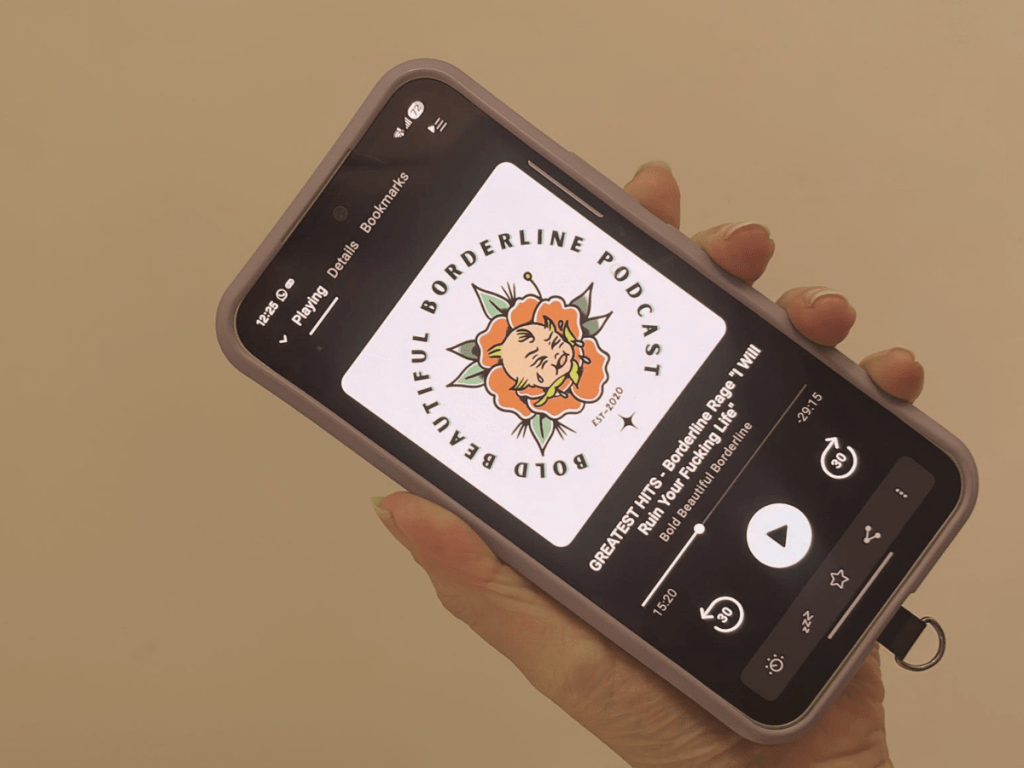
    Episode: Borderline Rage “I will ruin your fucking life”

    Year: re-released 7th December 2025

    Host background: Sara is a Licensed Clinical Social Worker with lived experience of BPD.

    1. WHY I CHOSE TO LISTEN TO THIS

    I decided to see if I could find some podcasts about BPD and this was one of the first to come up in the search. A therapist with lived experience is such a powerful combination and I was keen to tap into her wisdom.  

     I picked this recent re-release episode as a starting point because I find rage extremely challenging – both my own and other people’s. And my daughter experiences a lot of rage.

    2. WHAT IT COVERS

    Sara breaks down in detail a recent argument she had with her husband: what she was feeling and why, and how it was resolved. She then goes back and gives examples from her past of when she experienced rage and dealt with it less well. She reads out responses she had from people with BPD as to what rage feels like to them. She goes into some of the theory behind BPD rage, DBT skills and guidance for people who might be on the receiving end of it.

    3. STRENGTHS

    Sara is highly articulate and speaks passionately and with great clarity about her own experience and as a therapist. I loved the ‘case studies’ from her own life.

    4. LIMITATIONS

    FYI there is the occasional swear word – in case you’re thinking of listening to it in a public space!

    Sara does give some brief advice to people who are on the receiving end of BPD rage, but this isn’t the focus of the episode.

    5. TONE AND SENSITIVITY

    She describes her podcast as raw, honest and sometimes humorous and that’s what I got from this episode. She has great empathy for her listeners who have BPD – their strengths and their struggles.

    6. PERSONAL REFLECTION

    I think I’m going to re-listen to this episode as there was so much for me to digest. Listening to her journey – things she did when she experienced rage when she was younger, to how she handled it in this recent argument with her husband left me with hope. My daughter is working so hard in therapy, but it’s a long, slow haul and sometimes it’s hard to see the progress, so it’s heartening to hear from someone who has stuck with it and is now in such a different place.

    7. WHO IT IS FOR

    I think it’s primarily for people with lived experience of BPD, but as someone supporting a loved one with it I also found it really useful.

    8. STANDOUT QUOTE

    It’s OK to feel anger for longer periods of time, it’s OK for all of those things to live there, it’s just simply what we do with it.

    9. FINAL THOUGHTS

    This podcast is now on my subscribed list!

    LINKS

  • The Pecking Order of Distress

    The Pecking Order of Distress


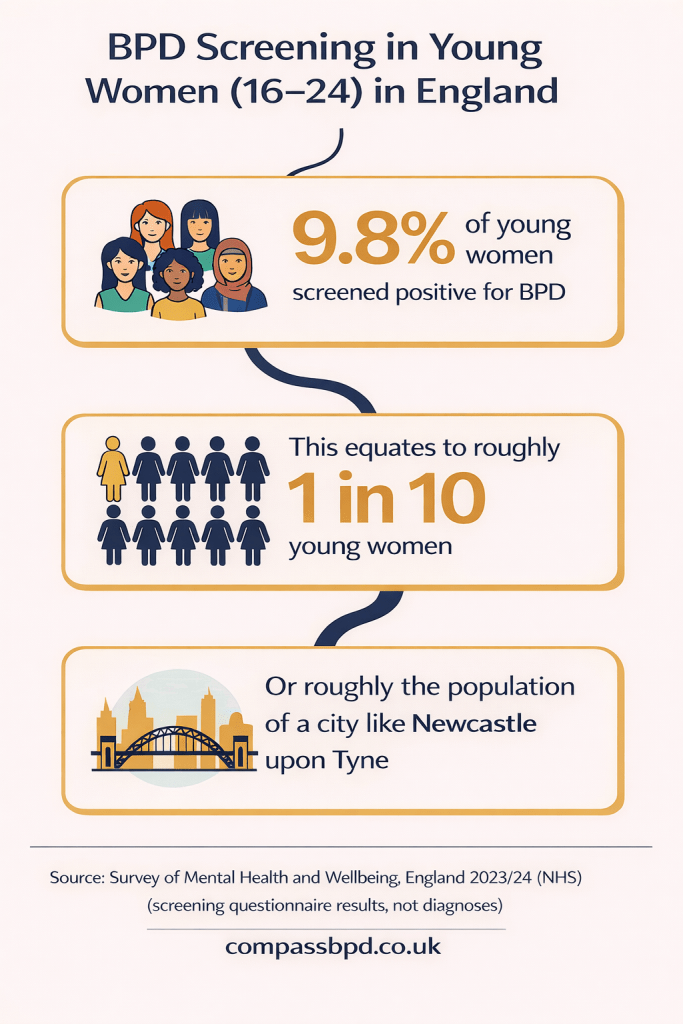
    I keep thinking about a conversation we had earlier, dearest daughter. The one where I told you about the recent NHS survey suggesting that as many as 1 in 10 young women may have Borderline Personality Disorder (BPD).

    I’m not sure how I was expecting you to react – I think I hoped it would make you feel less alone. But your initial reaction was disbelief. You pointed out that you don’t see hordes of young women having episodes out in public — and surely you would, if there were really 10% young women out there with the condition.

    I got defensive

    I’d spent so long looking at the report, trying to understand what it was saying, how the screening for BPD worked, that you refusing to believe it felt like you were saying my article was wrong — even though I was just reporting the results.

    And I got that familiar feeling of frustration that has come from many years of me saying something and you automatically saying the opposite. Like disagreement is your reflex — even when I’m not arguing, just reporting.

    Athough, in this instance, I think you have a point. One in ten young women potentially having BPD does seem impossibly high. But even it’s an overestimate and the real number is closer to one in twelve, or one in fifteen, that’s still a huge number of people.

    Quiet suffering still counts?

    Wanting to defend the statistic, I suggested that maybe some had a different, quieter form. After all, there are many different “flavours” of BPD — not everyone explodes in public.

    You replied with your trademark bluntness: then they don’t really have a problem and shouldn’t count.

    TikTok and self-diagnosis

    You talked about TikTok and how frustrating you find it, seeing people doing posts, self-diagnosing themselves with serious mental health conditions like BPD — the “oh I get anxious and I wanted to kill myself once so I must have BPD” brigade.

    I can see why this would irritate you. The not understanding. The seeming desire to jump on a bandwagon. The undeserving taking a slice of your pie.

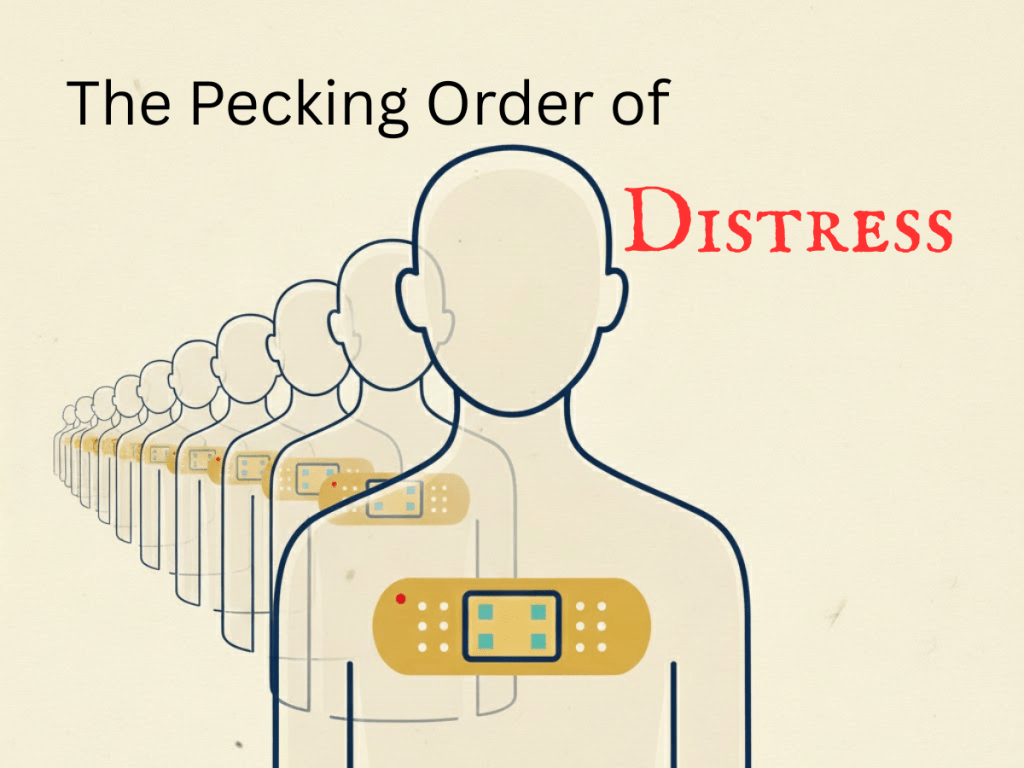
    But I also hate pecking orders of distress. The way people like to judge suffering and decide whether it is ‘better’ or ‘worse’ than an imaginary legion of others. It wouldn’t be so bad if these judgements were kept private, but they never are. People feel honour-bound to tell you your suffering isn’t as bad as someone else’s. You get put in your place — usually to shut you up.

    I say this because it’s definitely not just you who judges, I do it — we all do. It has been part of society since forever. Perhaps it’s worse now because of social media. I don’t know. What I do know is that it needs to stop. There has to be another way.

    A spectrum, not a tick box

    I reflected on this new way of thinking about personality disorder — how it is now to be seen as a spectrum, not a tick box. This new framework may be more accurate but I fear it will turn people’s suffering into one long pecking order of distress.

    Given that the NHS has limited resources, how will decisions be made as to whether you qualify for treatment for a personality disorder? How far down the continuum will you need to be? Will there be a magic algorithm that sifts through all the crisis team referrals and the hospitalisations and decides who is deserving? Not saying the system is any better now of course, but if the system is going to change, I’d like it to be for the better.

    TikTok and your diagnosis

    But then you talked about how TikTok was useful in your own journey to diagnosis.

    You were at college and struggling and saw all these videos where people were describing what they felt and did. They called it BPD and you thought they meant bipolar. But when you looked up bipolar specifically, you thought: this isn’t me. So you were confused, and you talked to me about it.

    I said BPD stands for Borderline Personality Disorder, not bipolar. That you having a BPD diagnosis was something I’d discussed with CAMHS a few years before, but they were reluctant to assess you at that age because emotional intensity and instability can look like ‘normal teenage’ stuff. But that maybe it was time to get you properly assessed – you were 19 at the time.

    So I found a psychiatrist privately. Things were so bad I didn’t want to wait months or possibly years to find this out. And hey presto, we’d both been correct. Or rather, the psychiatrist agreed with us. She diagnosed you as having BPD.

    Diluting the experience

    The other thing you said that gave me pause: you refused to believe the 1 in 10 statistic because if it was true, it would give people an excuse to treat it as less serious. Like the volume somehow diluted the severity of experience.

    And maybe what you were really reacting to wasn’t the statistic at all, but the risk that other people would use it against you. That they’d hear “mainstream” and translate it as: Not that bad. Not that urgent. Not worth resources.

    Bandages

    It made me think of the times we used to go to therapy after I adopted you. When we got ready for the journey home, you’d sometimes fake a fall and insist on bandages for an “injured” limb.

    Even when we all knew what you were doing, you still needed it. Because pain that can’t be seen has a habit of being doubted.

    Mental ill-health and trauma can feel brutally lonely for that reason: it’s invisible. And you found a clever way of making the invisible visible.

    You’ve fought so hard to get me — and others — to understand how serious your pain is. So I can see why anything that hints your suffering is now commonplace might feel like it’s pushing you back into being unseen.

    But what if….

    … there are hundreds of thousands of young women like you out there — suffering and not being understood?

    Maybe at the heart of this is a dialectical truth: you can be desperately unwell — and you can be one of many. Both things can be true at the same time.

    If 1 in 10 young women do have BPD, that statistic doesn’t make it trivial. It makes it very, very urgent.

  • A Dive Into The APMS

    A Dive Into The APMS

    The Adult Psychiatric Morbidity Survey (APMS) 2023/4 is a large NHS survey that gives a “snapshot” of adult mental health in England. It follows the same basic approach as the last APMS in 2014, so we can make some comparisons over time.

    The survey results were published at the end of 2025.

    This wasn’t an online poll. Researchers interviewed a random sample of adults in private households, and people answered the most sensitive questions privately on a laptop. Because it’s a household survey, it doesn’t include people living in settings like prisons or inpatient units, and it’s likely to under-represent people who aren’t in stable housing — all groups where mental illness rates are often higher.

    This post focuses on what the survey suggests about Borderline Personality Disorder (BPD).


    Boxes vs Spectrums

    The report notes that personality disorder diagnosis is changing. Older systems tried to put people into categories (like “BPD”), even though many people don’t fit neatly into one box. Newer thinking treats personality disorder more like a spectrum: traits become a “disorder” when they’re so intense or inflexible that they seriously disrupt everyday life and relationships.

    The APMS sits between the two approaches — it reports both category screens for BPD and antisocial personality disorder (ASPD), and a broader screen for general personality disorder traits.

    The report also notes a debate: critics worry a broad “general personality disorder” label could widen the net and increase stigma and pressure on services, while others argue personality disorder has been underdiagnosed and better recognition could improve care.


    What Screened Positive Means

    The APMS did not check people’s NHS records or diagnose them in clinic. It used questionnaires designed to work out if it’s likely someone has a condition like BPD.

    So these figures do not mean a confirmed diagnosis after a full assessment — they mean screened positive on a questionnaire.


    Key BPD Numbers

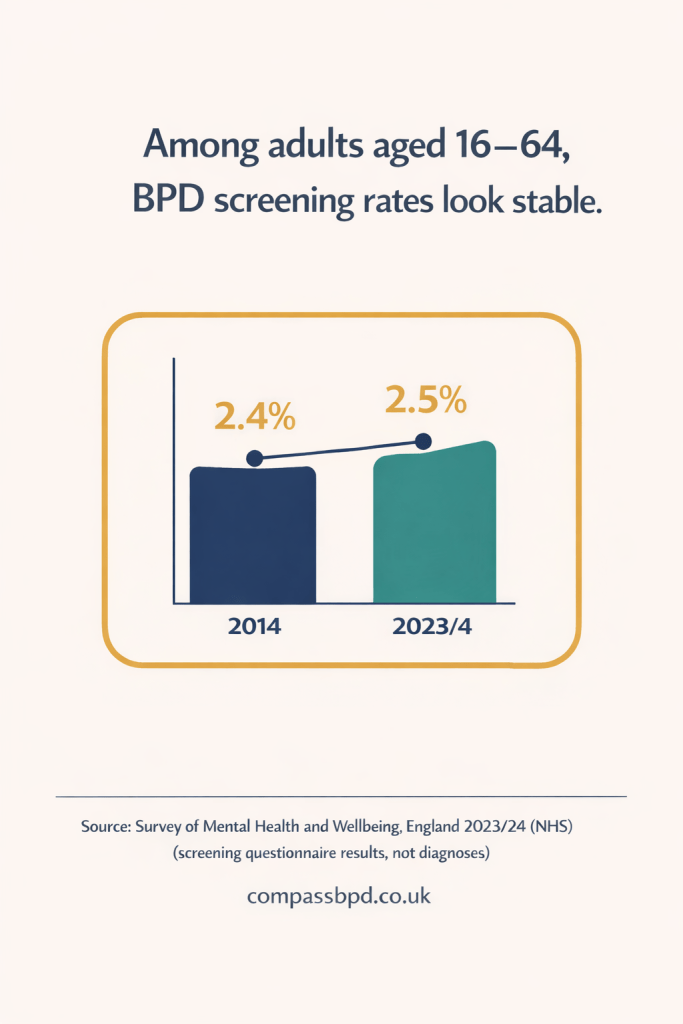
    • We can compare data regarding numbers who screened positive for BPD with data from 2014
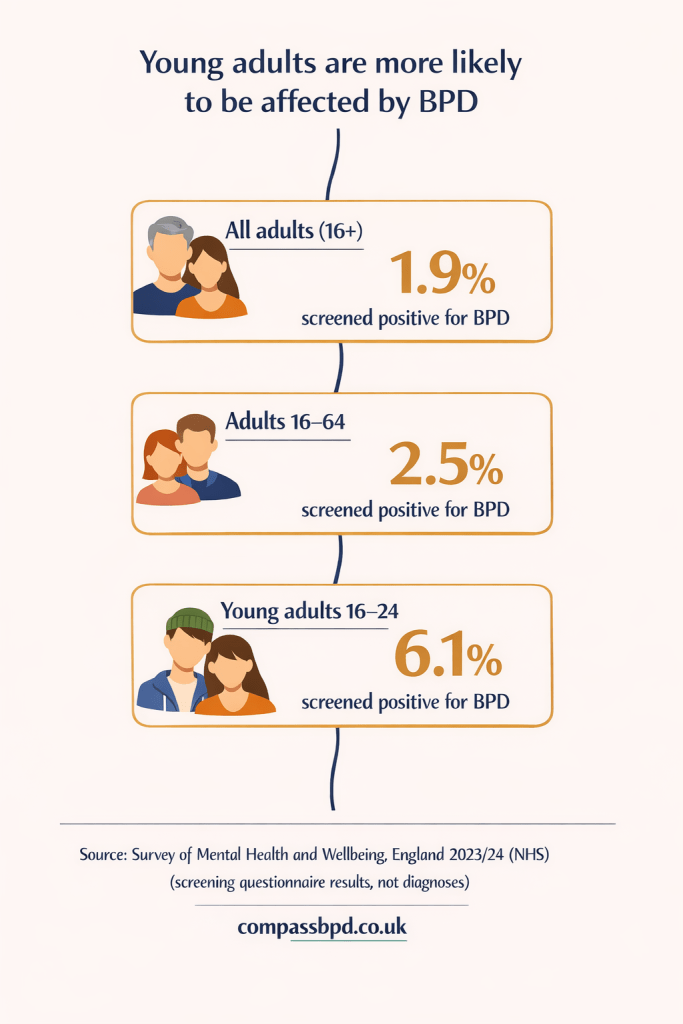
    Bar chart comparing BPD screen-positive rates in adults aged 16–64: 2.4% in 2014 and 2.5% in 2023/4.
    BPD screening hasn’t budged much in a decade (16–64): 2.4% → 2.5%.
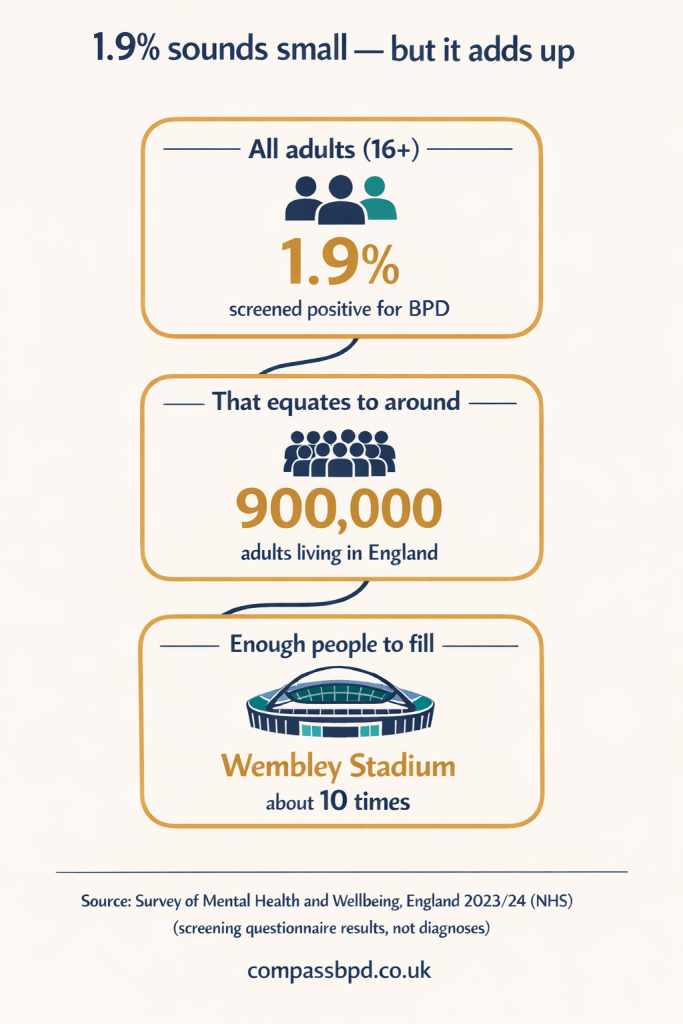
    • If you look at all adults 16 years and older, 1.9% screened positive for BPD
    Infographic showing 1.9% of adults aged 16+ screened positive for BPD, equating to around 900,000 adults in England (illustrated with people icons).
    1.9% sounds small — until you realise it’s about 900,000 adults in England.

    Young Women: A Standout Finding

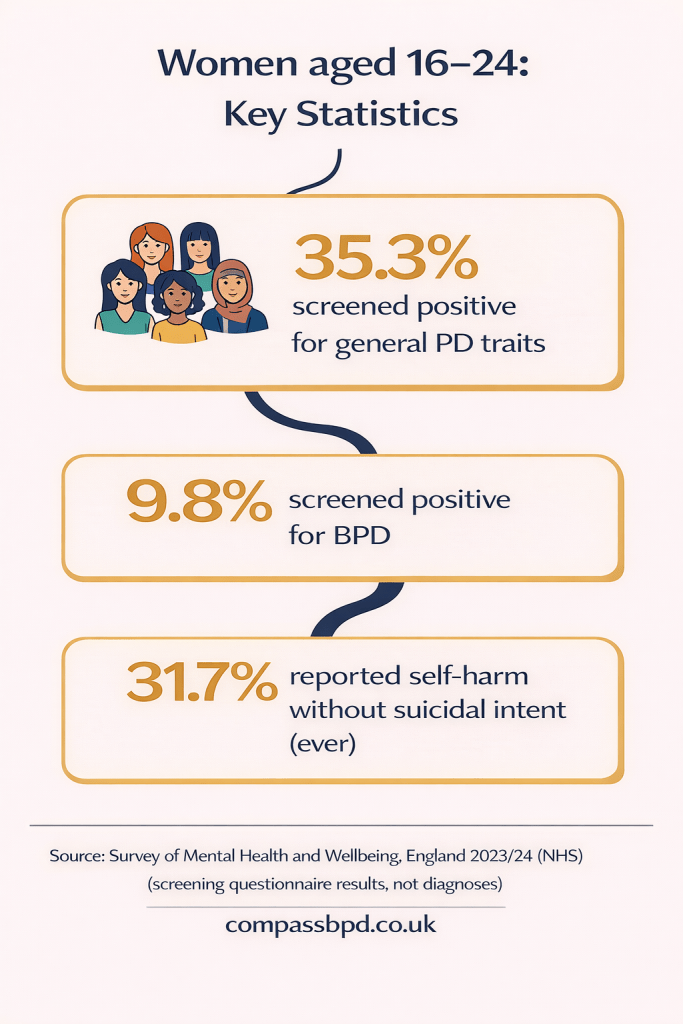
    One of the most striking sets of results is for women aged 16–24. They suggest that young women are experiencing personality disorder and self-harm (a common feature of BPD) at among the highest rates in the survey.

    Infographic listing women aged 16–24: 35.3% screened positive for general personality disorder traits, 9.8% screened positive for BPD, and 31.7% reported lifetime self-harm without suicidal intent.
    Young women (16–24) are the outlier: PD traits, BPD screening, and self-harm all spike.

    The BPD statistic alone is cause for concern.

    Infographic stating that 9.8% of women aged 16–24 screened positive for BPD (approximately 1 in 10).
    About 1 in 10 young women (16–24) screen positive for BPD.

    The report also notes that some critics see “personality disorder” labels as a way of medicalising understandable responses to trauma, inequality, and social pressure.

    Are we diagnosing a biological disorder — or measuring the weight of modern society on young women?


    A Big Caution: Overlap And “Diagnostic Overshadowing”

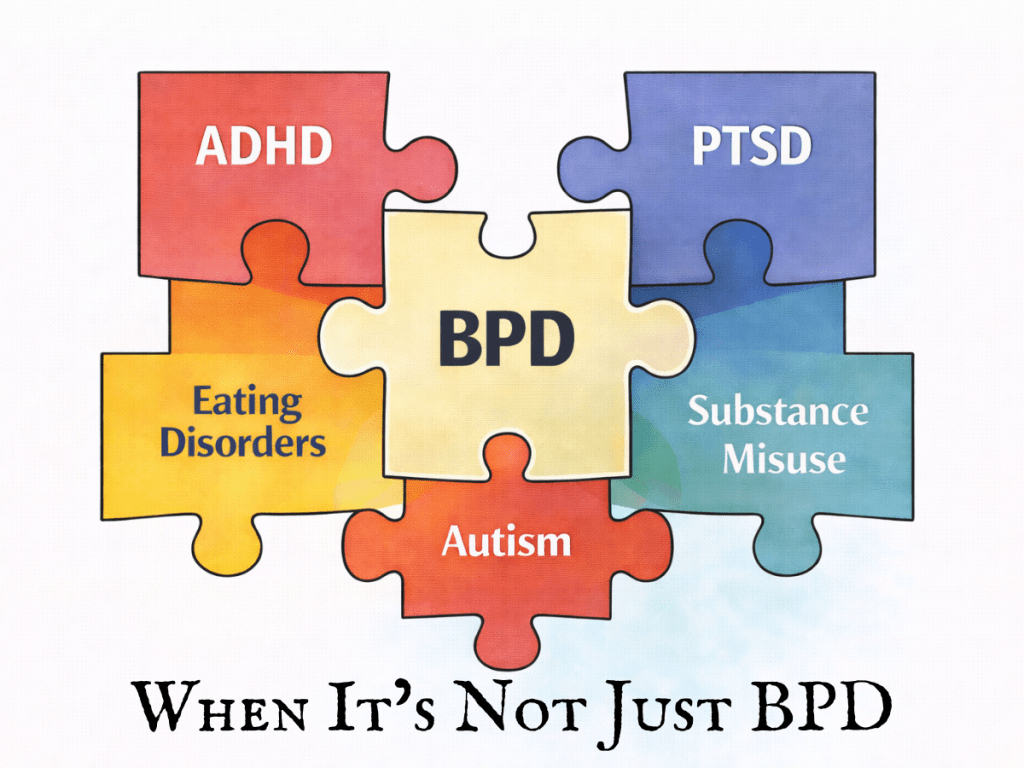
    The report points out that BPD and general PD criteria can overlap with autism and complex PTSD, which can contribute to “diagnostic overshadowing” (thinking a symptom is linked to one condition when it’s really caused by a different one).

    However, the report doesn’t publish a breakdown of any overlap between people who screened positive for BPD and autism or complex PTSD. Presumably because only 99 people in the survey screened positive for BPD, which limits how much detail you can reliably analyse.

    For me, this is a key area of concern. How can the right treatment be given, if we don’t fully understand what is causing the behaviour?


    The Soup Of Distress (What Tends To Cluster With PD Traits)

    What the report does show clearly is that people screening positive for general personality disorder traits are more likely to be facing wider pressures — including unemployment and financial hardship, and higher rates of depression/anxiety and limiting physical health conditions.


    The Treatment Gap: Pills vs Therapy

    The report suggests a mismatch between recommended care and what people report receiving.

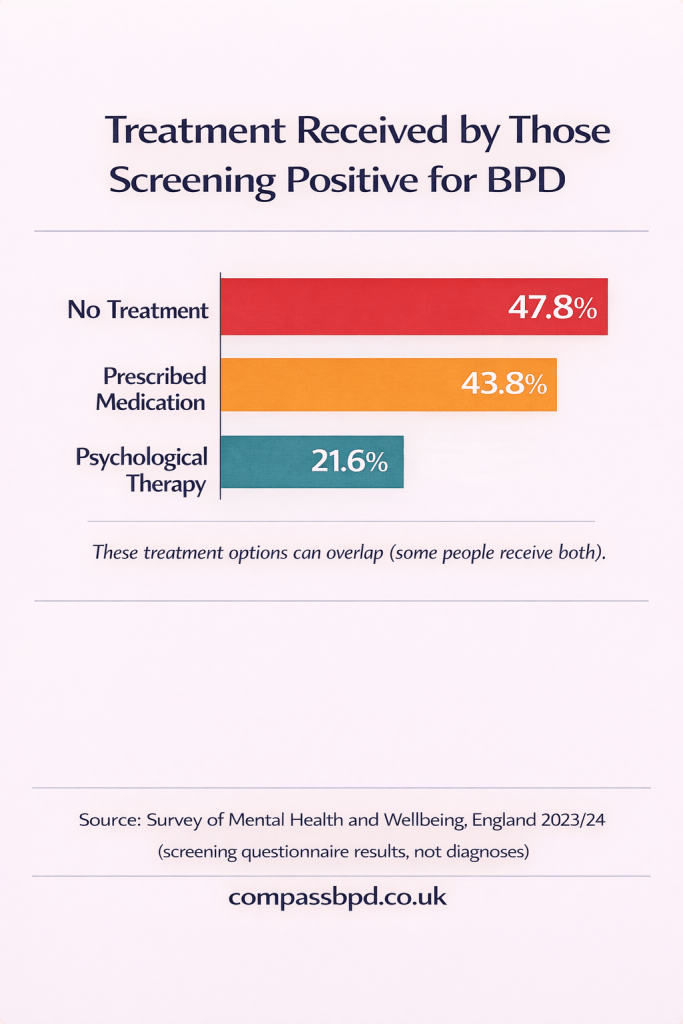
    Horizontal bar chart for people screening positive for BPD: 47.8% reported no treatment, 43.8% reported medication, and 21.6% reported psychological therapy; note that treatments can overlap
    Nearly half get no treatment — and meds beat therapy by about 2 to 1.

    The report concludes this points to a need to improve treatment and service provision (while also noting the small BPD sample size means we should be careful about over-interpreting).


    One Hopeful Note – And One Hard Reality

    A hopeful note is that the much lower screen-positive rates in older age groups challenge the idea that BPD symptoms must be lifelong for everyone (though the APMS can’t track individuals over time).

    Chart showing BPD screen-positive rates are highest in younger age groups and lower in older age groups.
    BPD screening peaks in young adulthood — then drops with age.

    But the report also notes that this isn’t a trivial condition. It cites earlier UK research in people treated by specialist NHS mental health services (beyond GP care) where life expectancy was estimated around 18 years shorter than the general population, and notes many were likely to have had a BPD diagnosis.

    Conclusions

    My conclusion is that it’s great to have this big-picture overview of mental health in England — but the survey now raises questions that need much more granular research.

    For example, my daughter has first-hand experience of diagnostic overshadowing: there are services for other conditions that won’t engage with her because she has a BPD diagnosis. That has been a major barrier to her getting better. The authors of this report suggest she isn’t the only one — but where is the data to confirm this pattern, measure its impact, and show what improves outcomes? Without clear evidence, it’s harder to push services to change.

    The figure of around 1 in 10 young women screening positive for BPD is a wake-up call. Even allowing for the limits of screening tools, this is too common to ignore. It should trigger urgent research into what’s happening for young women — and why.

    And the treatment picture won’t surprise anyone who has tried to access therapy for themselves or a loved one with BPD. It’s also not surprising that medication is used so often, even though there isn’t a drug that specifically treats BPD. When waiting lists are long and therapy is hard to access, people in crisis understandably want something — anything — that might ease their pain.

    Now that this report is out, the question is: will we treat these findings as a headline, or as a prompt for real change — better data, better access to psychological help, and fewer people falling through the cracks?

  • Me and the Voice in my Head

    Me and the Voice in my Head

    Title: Me and the Voice in My Head
    Channel: Channel 4 (available via Channel 4 Player)
    Year: 2024
    Production Company: Hungry Bear Media
    Format: Documentary


    1. Why I Chose to Watch This

    It seems that, at present, the only way to get a documentary about mental health commissioned by a TV channel is to attach a celebrity to it. I find this frustrating — the whole celebrity thing makes me less inclined to watch something, not more.

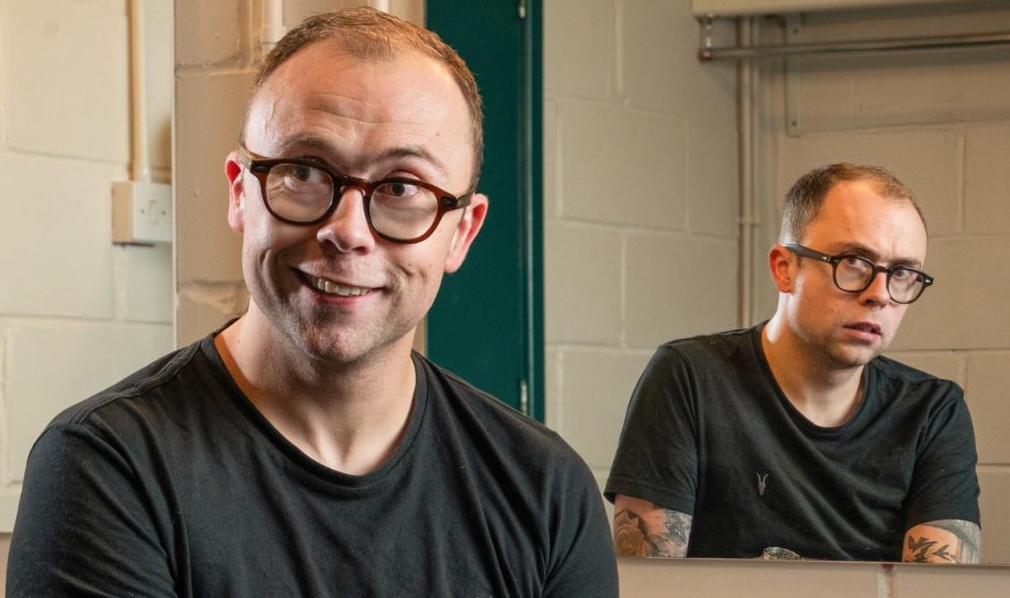
    This documentary is another in that ilk, however the good news is comedian and actor, Joe Tracini is absolutely brilliant and has something genuinely important to say about Borderline Personality Disorder.


    2. What It Sets Out to Do

    Joe is brutally honest about his experience of life and the way he thinks about himself and others, helping to illuminate what it actually means to live with BPD.

    This could easily have been a very dark and overwhelming watch, but Joe has a gift for comedy and highlighting the absurd. There are laughs and lighter moments even when he’s tackling incredibly tough topics, including suicidal thoughts.


    3. Summary of Content

    The documentary follows Joe over ten weeks as he tries to get his career back on track by preparing and performing a stand-up routine about his mental health. Alongside this, he speaks to a therapist to learn more about BPD, introduces us to his girlfriend and parents, and explores his childhood in search of clues as to why adulthood has been such a mental-health struggle for him.


    4. Strengths

    The standout moments for me were the scripted sections in which a man behind the camera interviews both Joe and his alter ego, Mick — the name he gives the voice in his head that says cruel things — together on a couch. It was interesting to hear Mick say so many of the things my daughter has said over the years. I thought that voice was unique to my daughter, but it seems not. And Joe’s performance, conveying the brutality of what it says with humour, is an incredible feat.


    5. Limitations

    Joe does visit a clinical psychologist who specialises in BPD to learn more about the condition, but overall the documentary focuses on his personal experience rather than exploring current research or the full range of available therapies.


    6. Tone and Sensitivity

    The tone of the programme is unlike most portrayals of mental health on television. It is frank, dark, irreverent, and surprisingly funny.


    7. Personal Reflection

    As the parent of a young adult with BPD, I found myself reflecting on my daughter’s childhood while watching Joe reflect on his own – painful to do, but it gave me new insights.

    My daughter is the bravest person I know, and seeing Joe stand up to Mick showed just how brave people with BPD are. Choosing to keep going when you have a voice like Mick’s in your head is an act of great courage.


    8. Who It’s For

    The documentary is designed for a general audience, but will be especially meaningful to people with lived experience and their loved ones.


    9. Standout Moment or Quote

    “The more I talk about how f*d up I am, the less f*d up I feel — which is mental.”


    10. Final Thoughts

    I’m delighted that Me and the Voice in My Head won Best Documentary at the Grierson British Documentary Awards 2024. Joe and the team at Hungry Bear Media deserve recognition for creating such a brave, unique, and enlightening look at BPD.

    You can find Joe on social media